LIFE INSURANCE IS AN ASSET
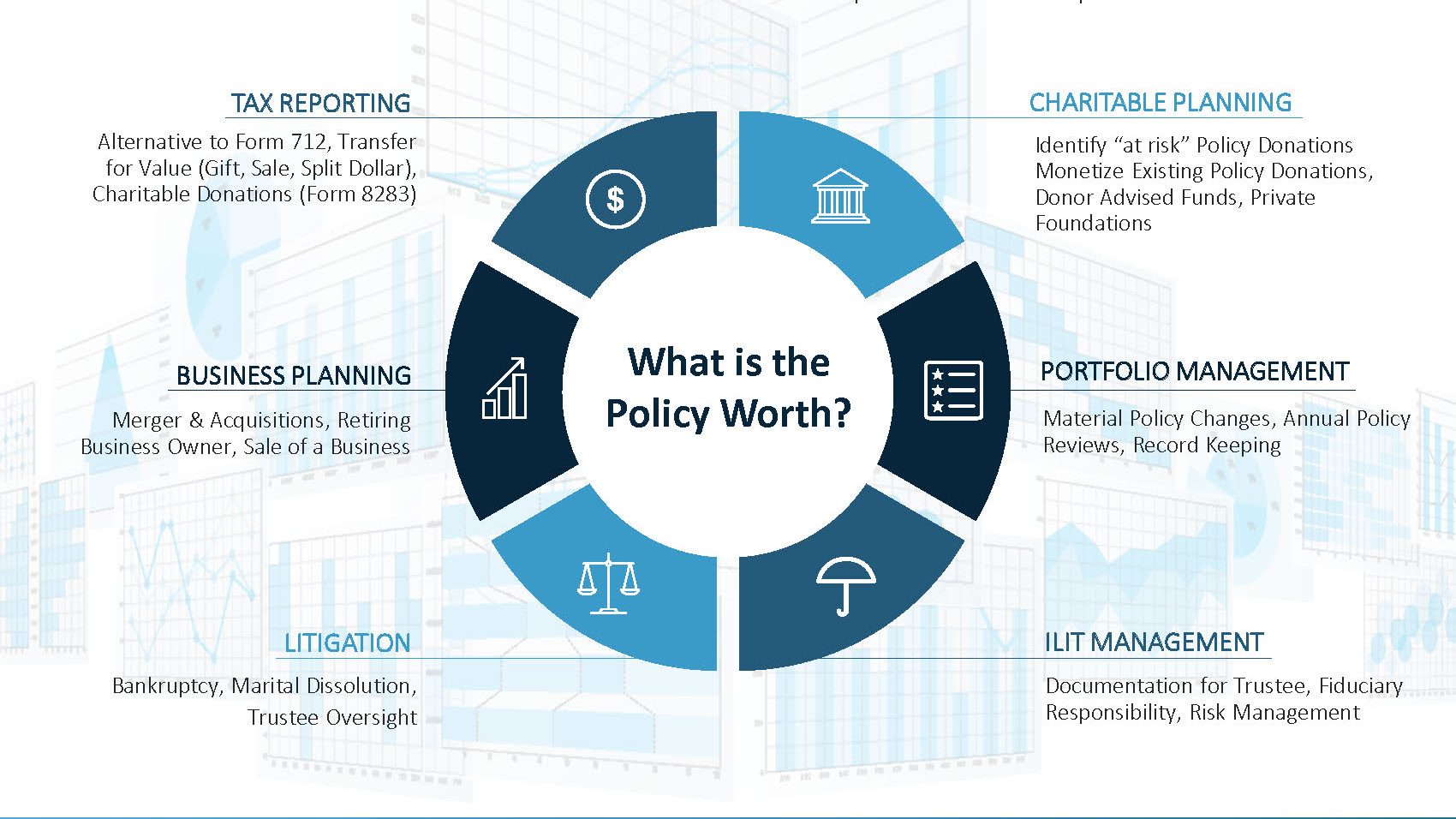
Life insurance appears in virtually every planning context (family wealth transfers, business succession, charitable giving, trust administration, and retirement funding), and is a dynamic asset with measurable Fair Market Value (FMV).
FAIR MARKET VALUE (FMV): According to IRS guidelines, FMV is the price at which property would change hands between a willing buyer and a willing seller, neither being under any compulsion to buy or sell, and both having reasonable knowledge of relevant facts. Life insurance is an assignable asset that can have a fair market value.
A POLICY REVIEW WITHOUT FMV IS LIKE A BALANCE SHEET WITH MISSING NUMBERS
When advisors, trustees, and fiduciaries treat life insurance as a fixed liability rather than a valued asset, they risk overlooking significant planning opportunities and exposing themselves to liability. Increased longevity, outdated valuation rules, and increasingly complex policy structures drive the need to integrate life insurance valuation into routine planning.
INCREASED LONGEVITY: With more clients living into their 90s and beyond, retirement planning can't simply rely on standard longevity tables. Changes in health could affect a policy's FMV. A customized longevity analysis enables you to make more tailored recommendations that maximize policy options.
WHEN TO VALUE LIFE INSURANCE ASSETS
GETTING STARTED

THE MISSING PIECE IN LIFE INSURANCE POLICY REVIEWS
INFORM YOUR CLIENTS: "I've added a Fair Market Value and Longevity Component to Life Insurance Policy Reviews."
Proactively integrate life insurance valuation into client conversations.

DIFFERENCE FOR TAX REPORTING = $1.12M
MINIMIZE LIABILITY AND REPUTATION RISK + UNCOVER NEW PLANNING OPPORTUNITIES